Chilled Mirror vs Capacitive Polymer Dew Point Sensors in Dirty Air
For dirty compressed air, shortlist a capacitive polymer transmitter for continuous monitoring only when its documented contamination limits match the sample. Consider a chilled mirror for a reference check when you can provide a representative, conditioned sample and maintain its optical surface. Neither choice removes the need to specify what reaches the sensor.
Start with the contaminant: oil aerosol, dirt particles, liquid water, or chemical vapor. Qualify each exposure separately. The CS Instruments FA 515 manual, for example, specifies clean, dry, oil-free gas even though other polymer designs carry broader contamination-resistance claims.
TL;DR: Choose against the actual gas conditions, then compare measurement and maintenance requirements. Chilled mirrors measure condensation temperature but require optical care. Polymer tolerance varies by design: Vaisala describes DRYCAP oil resistance, while CS Instruments specifies oil-free gas for the FA 515. Specify the sample system alongside the instrument, including pressure, filtration, and upset handling.
What is the practical difference?
A chilled mirror measures the temperature of a surface carrying controlled dew or frost; a capacitive polymer design senses moisture electrically. Edgetech’s PDM75 application note describes direct dew/frost-point measurement. Vaisala’s technology note describes its polymer approach as measuring relative humidity and temperature, then calculating dew point.
| Decision | Chilled mirror | Capacitive polymer |
|---|---|---|
| Measurement basis | Optical detection of condensate on a temperature-controlled mirror | Moisture-sensitive capacitance; Vaisala describes RH and temperature conversion to dew point |
| Oil contamination | Optical cleanliness matters; plan conditioning and access for cleaning | Check the design: DRYCAP resistance claims cannot be transferred to the FA 515 |
| Dust and dirt | Deposits can affect reflectivity and trigger maintenance | FA 515 instructions warn of measurement errors and require pre-filtration where dirt is present |
| Wet upsets | Controlled dew on the mirror differs from uncontrolled sample flooding | Check explicit recovery or non-condensing requirements |
| Solvent service | A cleaning procedure does not qualify the process gas | Obtain compatibility for the actual vapor mixture |
| Maintenance basis | Mirror condition, alarms, optics calibration, and instrument calibration | Element condition, protective cap, and model-specific calibration instructions |
The contamination and maintenance distinctions in this table follow the S8000 manual, the FA 515 manual, and Vaisala’s product-family note. They are not a ranking of every instrument using either principle.
The industrial sensor selection guide covers the broader specification process. Treat a reference instrument and an online transmitter as two possible jobs in the same measurement plan. Before comparing their readings, settle whether the required variable is line-pressure dew point or an atmospheric value. Our dew point vs relative humidity guide explains that distinction.
Which handles oil and dust better?
Check the selected model’s permitted medium. Vaisala describes an upper-electrode structure intended to exclude larger oil molecules in its DRYCAP design. CS Instruments instead requires clean, dry, oil-free gas for the FA 515 and identifies oils and oil vapors as harmful components. Those statements do not establish universal polymer immunity. (Vaisala; FA 515 manual)
The FA 515 manual also recommends a pre-filter before the measuring chamber when compressed air contains oil and dirt. Read that alongside its intended-medium requirements: filtration must deliver gas that meets the specification. Ask the supplier which contaminants the proposed conditioning will remove and what will remain at the sensing element.
Chilled-mirror cleanliness is part of the measurement. The Michell S8000 manual describes contamination monitoring and warns that severe contamination can produce a fault and standby. Its Dynamic Contamination Control cycle re-establishes the optical baseline; a contamination warning still calls for cleaning and optical calibration.
For procurement, compare complete sample arrangements. A probe with a protective cap and a mirror behind a maintained sample panel are different offers from the bare instruments. Request the post-conditioning gas specification, maintenance access, and expected behavior when a filter loads up. Use those answers to narrow the shortlist before comparing catalogue accuracy.
 Oil resistance belongs to the selected sensor design; specify the gas that will reach it after sample conditioning.
What happens during a wet upset or solvent exposure?
Water tolerance needs its own check. Vaisala describes DRYCAP recovery from water spikes after dry conditions return. The FA 515 manual instead states that no condensation is allowed on its element and specifies less than 95% RH without condensation. A water-recovery statement for one polymer design does not qualify another. (Vaisala; FA 515 manual)
For a mirror, the controlled condensate used to measure dew point is different from liquid arriving through the sampling system. The S8000 manual discusses protection against entrained droplets and warns that condensation in sample tubing removes water from the gas, invalidating the sample. Protect the path upstream as well as the sensor.
For chemical vapors, require compatibility for the actual mixture, concentration, temperature, and pressure. The reviewed manufacturer documents do not establish a common solvent-service limit for these technologies. The Optidew manual names solvents for mirror cleaning; that is a maintenance instruction, not a process-gas qualification.
Write the upset response into the purchase specification. Ask what the output does during recovery, how an invalid measurement is indicated, and what must happen before the value can be used again. Avoid accepting an unexplained “recovers after wetting” statement as the entire operating procedure.
How should the sample system affect selection?
Compare the instrument and its sample system together. The S8000 manual gives normal sample flow as 0.3–1 Nl/min, while the FA 515 manual describes approximately 1 L/min of expanded-air flow with a 7 bar supply for its standard measuring-chamber arrangement. These are specific installation figures, with different descriptions and conditions; they are not interchangeable flow requirements. (S8000; FA 515)
Michell’s sampling guidance recommends minimizing sample-line length and dead volumes, avoiding moisture-retaining materials such as rubber and nylon, and keeping the sample path above the gas dew point. It explains how moisture exchange with tubing surfaces can affect the result. Review these details alongside the sensor range. (S8000 RS manual)
The S8000 manual distinguishes particulate filtration for solids from coalescing or membrane protection against liquid droplets. It also warns that filtration adds moisture lag. A filter choice therefore needs a response-time review as well as a contamination review. Do not specify a universal pore size without checking the selected instrument and sample.
Use a comparison sheet with separate fields for sensor, chamber, filter, pressure, tubing, and flow. Leave no field implied by the sensor’s model name. This makes disagreements between two instruments easier to investigate: first compare the samples and operating states, then the indicated dew points.
Ask for the pressure basis in plain units and identify where pressure is measured. Our gauge, absolute and differential pressure guide helps prevent ambiguous pressure specifications.
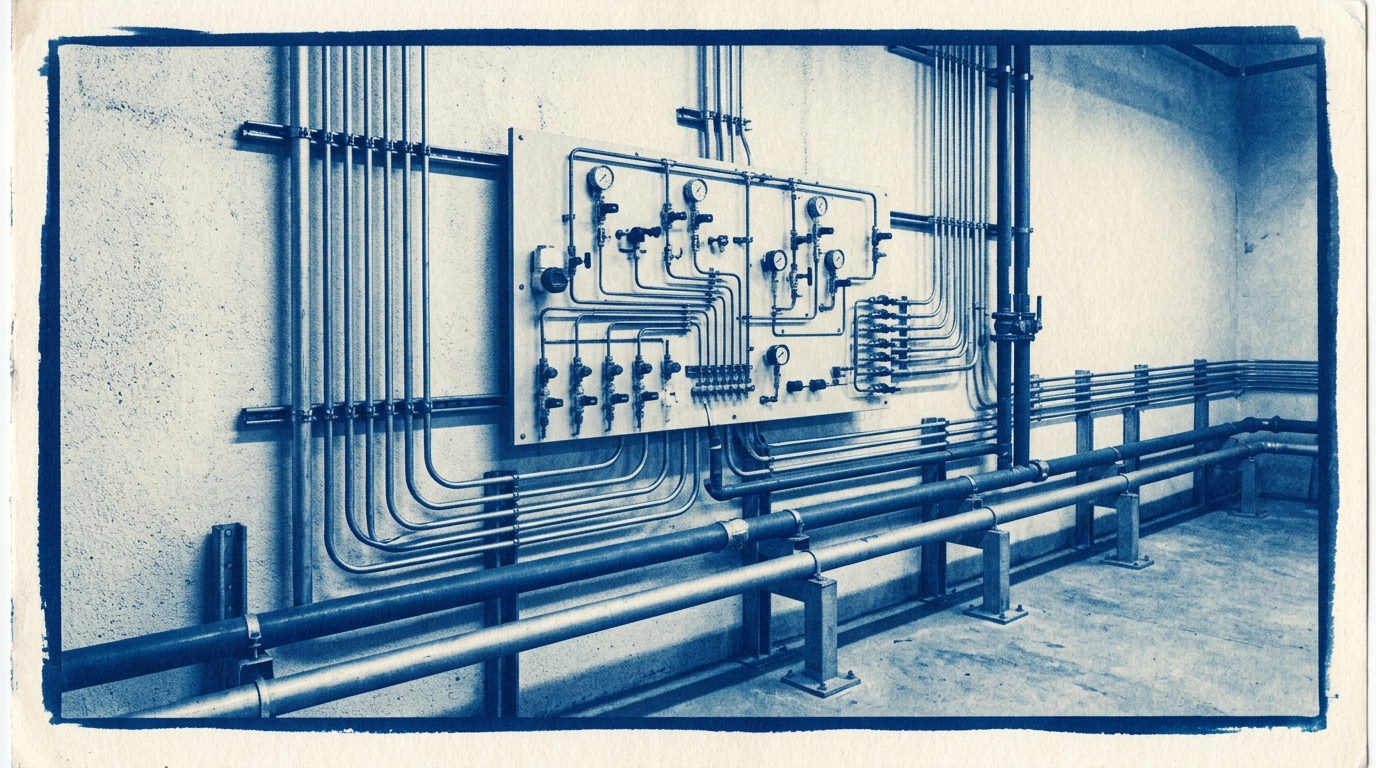 Specify the sample path alongside the sensor, with an explicit pressure basis, flow arrangement, and method of preventing upstream condensation.
Which is easier to maintain?
Budget maintenance from the relevant manual and site conditions. The S8000 requires mirror cleaning and optical calibration at a contamination warning. The FA 515 requires regular calibration and leaves cleaning frequency to the conditions and operator’s judgment. Neither manual supports a universal maintenance interval for every dirty-air installation. (S8000; FA 515)
Keep optical compensation, cleaning, and instrument calibration as separate maintenance items. For a mirror installation, ask how technicians will isolate and access the measurement cell. For a polymer installation, ask how they will inspect the protective cap and service the element under the manufacturer’s procedure. Do not transfer a cleaning method from a different probe or mirror.
Request a quotation covering sample conditioning, consumables, calibration, service access, and spare-instrument arrangements. With no like-for-like installed-cost evidence here, a universal price winner would be misleading. The sensor calibration and drift guide provides a broader framework for planning checks and recalibration.
Questions to settle before ordering
Use this checklist to compare the shortlisted models:
- Define the gas. List particles, oil aerosol, vapor contaminants, and credible liquid-water upsets separately.
- Define the measurement. State the dew-point range, pressure basis, required uncertainty, and allowable response time.
- Qualify the complete assembly. Obtain permitted-media and pressure limits for the sensor, chamber, filters, and fittings.
- Define invalid-output behavior. Include cleaning, purge, compensation, and upset-recovery states in the review.
- Assign maintenance. Name who checks filters, responds to contamination warnings, and arranges calibration.
A chilled mirror is worth considering where direct condensation measurement serves the reference task and optical maintenance is practical. A polymer transmitter is worth considering for routine monitoring where its documented gas limits fit. Make the final choice against those conditions. Specify the model and its permitted sample conditions in the purchase order.
Frequently asked questions
Are polymer dew point sensors immune to oil?
No blanket claim is justified. Vaisala describes oil resistance for DRYCAP, while the FA 515 manual requires clean, dry, oil-free gas. Compare the selected design and conditioned sample, rather than transferring one manufacturer’s claim to an entire sensor category. (Vaisala; FA 515)
Does contamination compensation replace mirror cleaning?
No. The S8000 manual describes compensation and monitoring but still calls for cleaning and optical calibration at a contamination warning. Include access for that work in the installation plan. (S8000 manual)
Can a polymer sensor recover after getting wet?
Check the model. Vaisala describes DRYCAP recovery from water spikes; the FA 515 manual prohibits condensation on its element. Treat recovery as a documented product capability, not a property guaranteed by the word “polymer.” (Vaisala; FA 515)
Which technology suits solvent-laden air?
Require a compatibility statement for the actual gas mixture before choosing either. The reviewed sources do not establish a universal solvent-service winner. A solvent listed in a mirror-cleaning procedure does not qualify that instrument for continuous exposure to the same solvent vapor. (Optidew manual)