

Flow Meter Types: Coriolis vs Ultrasonic vs Magnetic
A single 4-inch Coriolis meter costs $12,000-$18,000. A magnetic meter measuring the same line costs $2,500-$4,000. But the cheaper option physically can't measure hydrocarbons - it requires conductive fluid to function at all.
That hard physical constraint is the kind of detail that gets buried under vendor spec sheets and marketing claims. Engineers don't need another technology overview. They need a decision framework built on exclusion rules - what each meter can't do matters more than what it can.
This guide compares Coriolis, ultrasonic, and magnetic flow meters on the five factors that actually drive selection: accuracy, fluid compatibility, pipe size, installation constraints, and total cost of ownership.
TL;DR: Coriolis flow meters deliver the highest accuracy (±0.1% of rate) and measure mass flow directly, but cost $12K-$18K for a 4-inch line. Magnetic meters offer ±0.2-0.5% accuracy at $2.5K-$4K but require fluid conductivity above 5 µS/cm - ruling out hydrocarbons entirely. Ultrasonic clamp-on meters avoid pipe cuts but sacrifice accuracy to ±2-5%. Start with three questions: Is your fluid conductive? What accuracy do you need? What's your pipe size?
How Do Coriolis, Ultrasonic, and Magnetic Flow Meters Compare?
Here's the comparison that would've saved you thirty minutes of datasheet hunting. Every number below comes from manufacturer specifications (Emerson, Endress+Hauser, KROHNE) and industry benchmarks - not marketing claims.
| Feature | Coriolis | Magnetic | Ultrasonic (Transit-Time) | Ultrasonic (Clamp-On) |
|---|---|---|---|---|
| Accuracy | ±0.1-0.2% of rate | ±0.2-0.5% of rate | ±0.5-1.0% | ±2.0-5.0% |
| Repeatability | ±0.02-0.05% | ±0.1% | ±0.2-0.5% | ±1.0-2.0% |
| Turndown ratio | 100:1-200:1 | 20:1-40:1 | 10:1-30:1 | 8:1-20:1 |
| Min. conductivity | None | 5 µS/cm | None | None |
| Measures gas? | Yes | No | Yes | Limited |
| Measures slurry? | Yes (with wear) | Yes | Doppler only | Doppler only |
| Max practical pipe | ~12 inches | 120 inches | 120 inches | 120 inches |
| Straight-run req. | 0-5D | 5-10D upstream | 10-20D upstream | 10-20D upstream |
| Pressure drop | Moderate | Negligible | Negligible | None (external) |
| Purchase price (4") | $12,000-$18,000 | $2,500-$4,000 | $5,000-$10,000 | $4,000-$8,000 |
| Moving parts | No (vibrating tube) | No | No | No |
| Multi-variable output | Mass, density, temp | Velocity only | Velocity only | Velocity only |
That table reveals a pattern: you're always trading accuracy for cost, and fluid compatibility acts as a hard gate before cost even enters the conversation.
How Does Each Flow Meter Actually Work?
According to Emerson's flow measurement guide, each technology exploits a different physical principle. Understanding the mechanism explains why each has different fluid constraints - it's not arbitrary, it's physics.
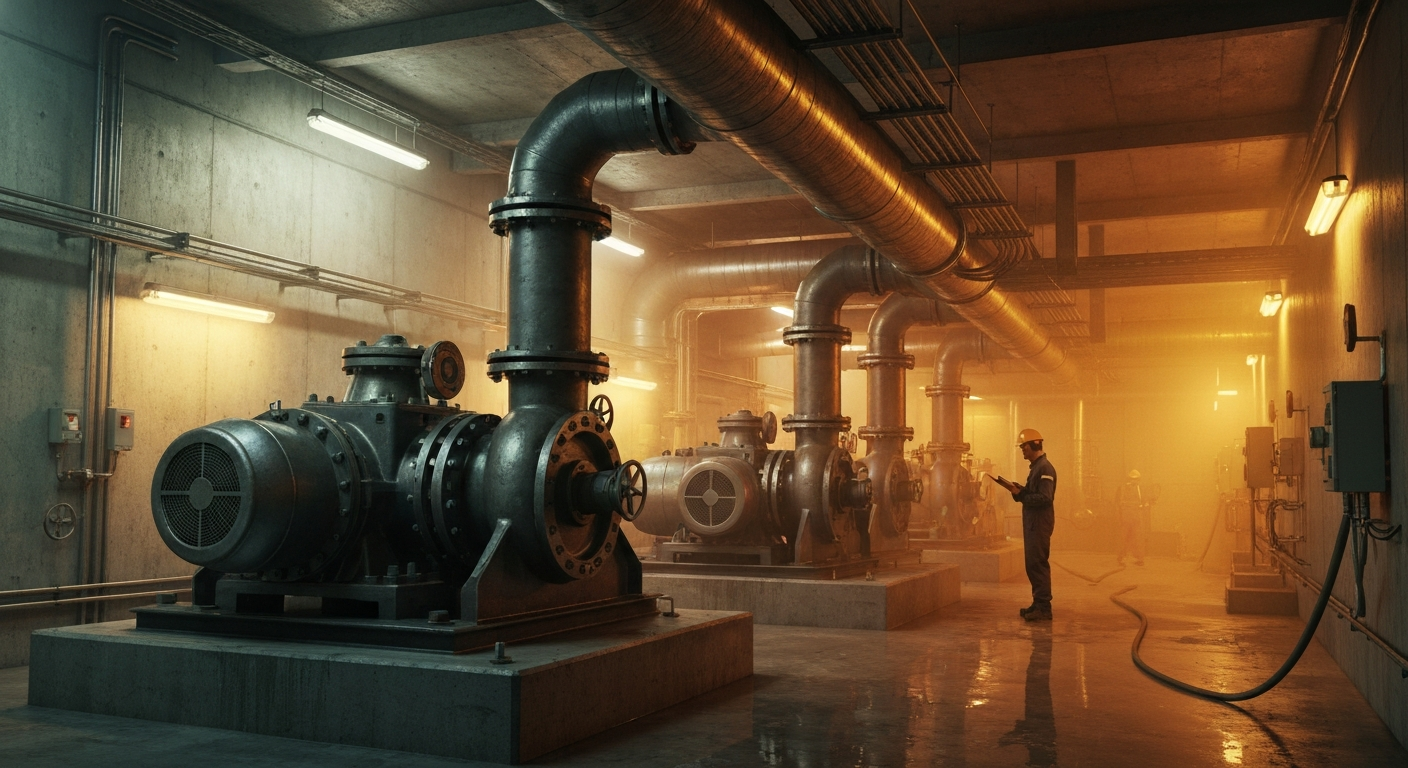 Coriolis, magnetic, and ultrasonic - three technologies, three physical principles, each with hard constraints that no engineering can override
Coriolis meters vibrate a U-shaped or straight tube at its resonant frequency. When fluid flows through, the Coriolis effect twists the tube proportionally to mass flow rate. Because the twist depends on mass (not volume), these meters directly measure mass flow. They also output fluid density and temperature simultaneously - three measurements from one device. For a deeper look at how sensors like these fit into the broader industrial sensor ecosystem, see our complete guide.
Magnetic (mag) meters apply Faraday's law of electromagnetic induction. A conductive fluid passes through a magnetic field, generating a voltage across electrodes proportional to flow velocity. Here's the catch: Faraday's law requires a conductive fluid. Below 5 µS/cm conductivity, there's no signal to measure. That's why mag meters can't touch hydrocarbons or deionized water.
Ultrasonic transit-time meters send sound pulses between two transducers - one upstream, one downstream. The transit time difference reveals flow velocity. They need clean, single-phase fluid because particles or bubbles scatter the signal.
Clamp-On vs Inline: The Ultrasonic Split
Ultrasonic Doppler meters work the opposite way - they need particles or bubbles. Sound reflects off entrained solids, and the frequency shift reveals velocity. Dirty fluid? Doppler's your tool.
Clamp-on variants mount externally on the pipe. Zero pipe cutting, zero process interruption, zero contamination risk. The tradeoff is accuracy: ±2-5% for clamp-on versus ±0.5-1.0% for inline wetted sensors. For survey measurements or temporary monitoring, that's perfectly acceptable. For custody transfer billing, it isn't.
Which Flow Meter Is Most Accurate?
Coriolis leads the field at ±0.1% of rate with repeatability of ±0.02-0.05% - the tightest specification of any flow measurement technology in industrial service (Micro Motion/Emerson, KROHNE OPTIMASS). But accuracy alone doesn't tell the full story. Turndown ratio determines how well a meter performs across varying flow rates.
A Coriolis meter with 200:1 turndown maintains specified accuracy across a massive flow range - from a trickle to full bore. Mag meters at 20:1-40:1 cover typical process variations but struggle with widely varying flows. Ultrasonic meters at 10:1-30:1 work well for steady-state applications.
For custody transfer - where flow measurement directly determines billing - only Coriolis (liquids) and multi-path ultrasonic (gas, at ±0.1-0.25%) meet the required accuracy. Everything else is a process measurement tool, not a fiscal one.
Worth noting: Multi-path ultrasonic meters with 4+ beam paths now compete directly with Coriolis on gas custody transfer accuracy at ±0.1-0.25%. They're the default for large-bore natural gas pipelines where Coriolis meters would be prohibitively heavy and expensive above 12 inches.
What Fluids Can Each Meter Actually Measure?
Magnetic flow meters require minimum 5 µS/cm fluid conductivity - a hard physical constraint that eliminates hydrocarbons, deionized water, and most organic solvents (ISA-75.01 flow measurement standards; Endress+Hauser Proline Promag). No amount of signal processing or firmware updates can work around Faraday's law.
This single spec should be your first filter. Before comparing accuracy or cost, answer one question: is your fluid conductive?
Print that flowchart. Stick it on the wall in your instrumentation office. It'll answer 80% of flow meter selection questions before you open a single datasheet.
Beyond conductivity, fluid cleanliness matters for ultrasonic selection. Transit-time meters need clean, single-phase fluid - particles and bubbles scatter the acoustic signal. Doppler meters flip this requirement: they need entrained solids or gas bubbles to generate a reflected signal. If your fluid alternates between clean and dirty, neither ultrasonic sub-type is ideal.
Coriolis meters handle nearly any fluid - liquids, gases, slurries, two-phase mixtures. But abrasive slurries accelerate tube erosion, increasing maintenance costs and potentially shortening meter life.
What Are the Installation and Pipe Size Constraints?
Per Endress+Hauser and KROHNE product catalogs, Coriolis meters are rarely installed above 12-inch pipe sizes. Weight, cost, and physical size all become impractical above this threshold. Magnetic and ultrasonic meters scale to 120 inches - a 10x range advantage that dominates large-bore applications.
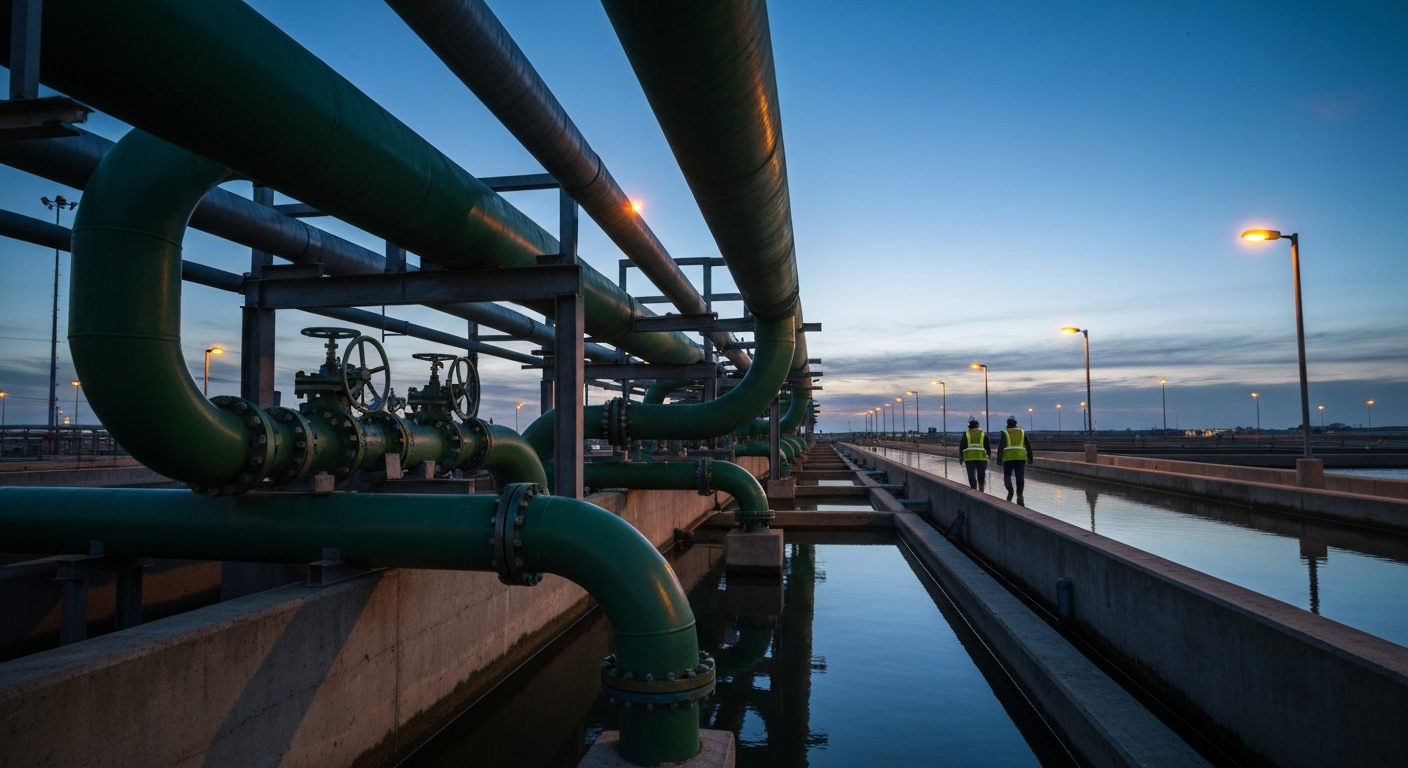 Coriolis meters need zero straight run but cap out at 12 inches - mag and ultrasonic scale to 120 inches with 10-20 diameters of upstream pipe
Straight-run requirements affect installation cost and layout flexibility. Coriolis meters need virtually no straight pipe upstream (0-5 pipe diameters), making them easy to retrofit into tight spaces. Mag meters need 5-10 diameters upstream and 3-5 downstream - standard for most installations. Ultrasonic meters are the most demanding at 10-20 diameters upstream, which can require significant piping modifications.
From the field: In a recent chemical plant retrofit, we couldn't find 20 diameters of straight run for an ultrasonic meter on a 6-inch line. That's 10 feet of unobstructed pipe. We switched to Coriolis - zero straight-run requirement, same measurement point, smaller footprint. The meter cost more, but the avoided piping modifications saved the project $8,000.
Pressure drop is the silent cost driver. Mag meters and ultrasonic meters have unobstructed bores - fluid passes straight through with negligible pressure loss. Coriolis meters force fluid through vibrating tubes, creating moderate to significant pressure drop. That drop means your pumps work harder, consuming more energy over the meter's 15-20 year service life. If your flow meter outputs a 4-20 mA analog signal rather than IIoT protocols for flow data, pressure drop can introduce noise into the measurement loop. Smaller flow sensors increasingly skip 4-20 mA for IO-Link vs. fieldbus connectivity, trading loop wiring for a digital point-to-point link.
What Does a Flow Meter Really Cost Over 5 Years?
A 4-inch Coriolis meter's 10-year energy cost from pressure drop alone can exceed its $12,000-$18,000 purchase price (Emerson Automation Experts). Purchase price is the number everyone compares. It's also the least useful number for a 15-year asset.
The 5-year TCO gap is dramatic. A Coriolis meter's total cost approaches $28K when you factor in pressure-drop energy costs. A mag meter stays under $7K. That's a 4.5x difference - far wider than the 3-4x purchase price ratio suggests.
Field data point: Across three plants we've instrumented in the Baltics, switching from scheduled 12-month calibration to diagnostic-verified intervals saved an average of $4,200 per year per plant - primarily from avoided production shutdowns during calibration windows, not the calibration cost itself.
Modern meters with built-in self-diagnostics (verification algorithms that detect sensor drift) can extend calibration intervals from the standard 12-24 months to 3 years. Over a 15-year meter life, that's 7-8 fewer calibration events at $300-$600 each. Not transformative, but it adds up across a plant with 200+ measurement points.
When does Coriolis still win on cost? When you need mass flow measurement for custody transfer, batching, or recipe control. The accuracy premium pays for itself when measurement errors directly impact revenue or product quality. A ±0.1% meter on a $50M/year crude oil custody transfer point pays back its premium in weeks.
Which Industries Default to Which Meter?
 Water plants standardize on mag meters, oil custody transfer demands Coriolis, and pharma is adopting single-use disposable wetted paths
According to Endress+Hauser's industry solutions data, magnetic meters account for the majority of flow installations in municipal water systems. Water and wastewater plants standardize on mag meters - conductive fluid, no moving parts, no clog risk, and rock-bottom maintenance costs. It's the obvious choice when your fluid is reliably conductive and ±0.2-0.5% accuracy is sufficient.
Oil and gas custody transfer relies on Coriolis for liquid hydrocarbons (non-conductive, accuracy-critical) and multi-path ultrasonic for large-bore gas pipelines where Coriolis meters would be impractically large and heavy.
Food and beverage facilities split between Coriolis and mag meters, both with 3-A sanitary certification and Tri-Clamp fittings for clean-in-place compatibility. The choice comes down to whether the product is conductive (most beverages are) or not (oils, fats).
Emerging trend: Single-use Coriolis meters are gaining traction in pharmaceutical and biotech manufacturing. Disposable wetted paths eliminate cleaning validation entirely - a process that can take longer than the production run itself.
Chemical processing is where selection gets application-specific. Corrosive chemicals in small lines favor Coriolis with exotic alloy wetted parts (Hastelloy, tantalum). Large-bore cooling water and utility lines default to mag meters. Temporary monitoring during commissioning or troubleshooting uses clamp-on ultrasonic. Many of these applications also involve pressure measurement, RTD vs thermocouple selection at the same process points, and level measurement in storage vessels.
How Should You Choose? A Decision Framework
Three questions eliminate at least one technology before you compare a single spec - and those elimination rules come straight from the physics (ISA, AGA Report No. 11):
- Is your fluid conductive (>5 µS/cm)? If no → mag meter is ruled out. Choose Coriolis or ultrasonic.
- What accuracy do you need? If ±0.1% for custody transfer → Coriolis (liquids) or multi-path ultrasonic (gas). If ±0.5% for process control → any of the three works.
- What's your pipe size? If >12 inches → Coriolis is impractical. Choose mag (conductive fluid) or ultrasonic.
| Your Situation | Best Choice | Runner-Up | Why |
|---|---|---|---|
| Custody transfer, liquid hydrocarbons | Coriolis | - | Only option: non-conductive, needs ±0.1% |
| Municipal water/wastewater | Mag meter | - | Conductive, large bore, lowest TCO |
| Can't shut down the line | Clamp-on ultrasonic | - | Only non-invasive option |
| Large gas pipeline (>12") | Multi-path ultrasonic | - | Coriolis too heavy/expensive at this size |
| Conductive liquid, ±0.5% is fine | Mag meter | Transit-time ultrasonic | Lowest TCO, simplest install |
| Corrosive chemical, small bore | Coriolis (exotic alloy) | Mag meter (PTFE liner) | Application-dependent |
| Temporary survey measurement | Clamp-on ultrasonic | - | No installation, portable |
No single meter wins every application. That's the honest answer. The right choice comes from matching your fluid's properties and your accuracy needs to each technology's hard constraints - not from comparing spec sheets in a vacuum.
Frequently Asked Questions
What is the minimum conductivity required for a magnetic flow meter?
5 µS/cm - a hard physical limit set by Faraday's law of electromagnetic induction. Hydrocarbons (oil, gasoline, diesel), deionized water, and most organic solvents fall well below this threshold. Tap water (~500 µS/cm) and most process chemicals exceed it comfortably.
Which flow meter is most accurate?
Coriolis meters lead at ±0.1% of rate with repeatability of ±0.02-0.05%. For gas custody transfer applications, multi-path ultrasonic meters with 4+ beam paths achieve ±0.1-0.25%, competing directly with Coriolis in that specific niche.
Can a magnetic flow meter measure oil or gas?
No. Hydrocarbons are electrically non-conductive - typically well below the 5 µS/cm minimum. No firmware update or signal processing technique can overcome this physical limitation. Use Coriolis meters for liquid hydrocarbons or ultrasonic meters for gas.
Why are Coriolis flow meters so expensive?
Precision-machined vibrating tubes (often exotic alloys for corrosion resistance), integrated multi-variable electronics outputting mass flow, density, and temperature simultaneously, and custody-transfer-grade signal processing all contribute. A 4-inch Coriolis meter runs $12,000-$18,000 plus $3,000-$5,000 for installation.
When should I choose a clamp-on ultrasonic meter?
When you can't shut down the line for installation, when pipe sizes exceed 12 inches (where Coriolis becomes impractical), when you need temporary or survey measurements, or when ±2-5% accuracy is acceptable for your application. Clamp-on is the only truly non-invasive flow measurement option.
What is the minimum conductivity required for a magnetic flow meter?
5 µS/cm - a hard physical limit set by Faraday's law. Hydrocarbons, deionized water, and most organic solvents fall below this threshold. Tap water at ~500 µS/cm and most process chemicals exceed it comfortably.
Which flow meter is most accurate?
Coriolis meters lead at ±0.1% of rate with repeatability of ±0.02-0.05%. For gas custody transfer, multi-path ultrasonic meters with 4+ beam paths achieve ±0.1-0.25%, competing directly with Coriolis.
Can a magnetic flow meter measure oil or gas?
No. Hydrocarbons are electrically non-conductive, well below the 5 µS/cm minimum. No firmware or signal processing can overcome this physical limitation. Use Coriolis for liquid hydrocarbons or ultrasonic for gas.
Why are Coriolis flow meters so expensive?
Precision-machined vibrating tubes in exotic alloys, integrated multi-variable electronics outputting mass flow, density, and temperature simultaneously, and custody-transfer-grade signal processing. A 4-inch meter runs $12,000-$18,000 plus $3,000-$5,000 installation.
When should I choose a clamp-on ultrasonic meter?
When you can't shut down the line for installation, pipe sizes exceed 12 inches where Coriolis is impractical, you need temporary or survey measurements, or ±2-5% accuracy is acceptable. Clamp-on is the only truly non-invasive option.
Related Articles

